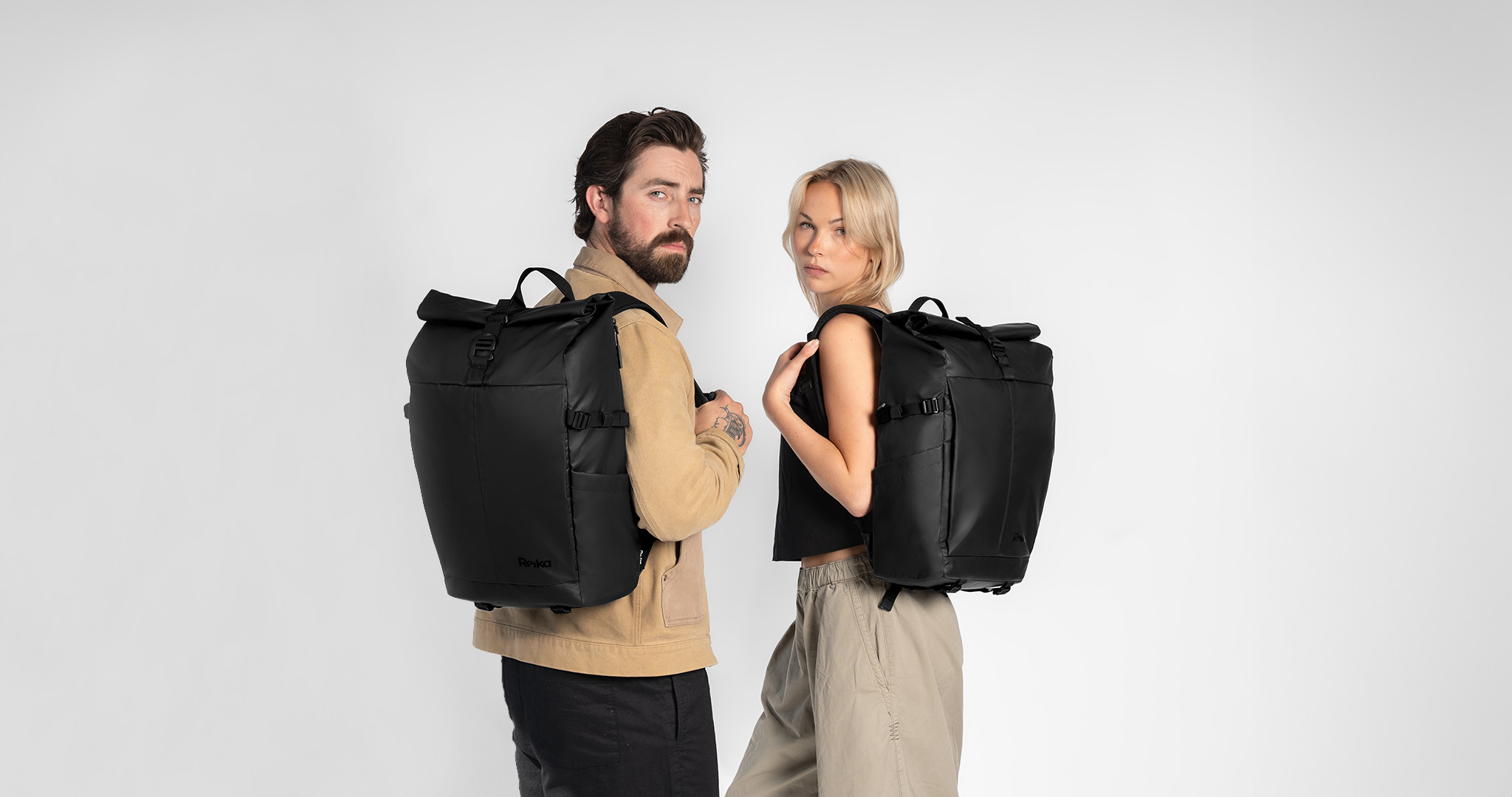
A technically specified daily carry that competes on construction quality: seam-taped seams, magnetic hardware, metal g-hooks, and bluesign certified sustainable materials from a certified factory in Indonesia.
Key facts
Most roll tops at this price cut corners: no seam taping, plastic g-hooks that wear fast, undersped magnets that fail in a year. The category's full of bags looking good in photos and disappointing in use.
The brief was building something that matches premium competitors on construction, without the premium price. That means better decisions on what matters: seam integrity, hardware durability, closure quality. Disciplined about where to cut on things that don't affect use.
Sustainability requirement added complexity: traceable recycled materials, certified factory, packaging at minimum. Reika's environmental commitment isn't marketing. It's a constraint running through every decision from fabric sourcing to how it leaves the factory.
/DER02399-opt.jpg)
/DER02834-opt.jpg)
The roll closure uses magnets rather than plastic buckles. Close cleanly with one hand, hold reliably under daily carry variation, don't wear out like plastic snaps after thousands of cycles. Higher component cost, justified by how it gets used.
Metal g-hooks at stress points rather than plastic. Weight and cost marginal. Durability difference over two or three years significant. These decisions separate bags that age well from those failing in year two.
A daily carry bag earns its price over three years of use, not on the first day. The construction decisions reflect that.
The profile was designed to compete visually with higher-priced bags. Clean lines, minimal branding, silhouette working in office or commute. Doesn't announce sustainability through conspicuously eco design choices.
Seam taping requires specific factory capability. Not all manufacturers can run taped seams at volume. Factory selection was driven by that, which is why it's made in Indonesia rather than a typical market.
The fabrics are traceable back to the recycling facility in Indonesia where the plastic was processed. Not a general recycled claim. Documented supply chain from recovered plastic to finished fabric. We oversaw that process at facility level, engagement most bags at this price don't have.
Bluesign certification covers factory and materials. A meaningful standard addressing chemical use, resource efficiency, worker safety across production, not just fabric testing.
Packaging: one biodegradable polybag per master carton, not one per unit. Consumer packaging is paper-based and size-reduced to minimum. Carbon footprint from packaging is small but controllable, so we controlled it.
Production in a bluesign certified factory in Indonesia, selected for seam taping capability and materials certification. We managed the full process from first sample through shipment: factory liaison, scheduling, QC, logistics.
Seam taping quality was critical. Application needs consistent width, position, bonding across every seam. Tape integrity checks part of daily QC, not just final inspection.
All units inspected to AQL 2.5. Magnetic closure operation, metal g-hook security, seam tape integrity all critical. Logistics through partner freight forwarders with full export documentation.

Production and QC
Reika Everyday Roll Top
The Everyday Roll Top ships with construction quality and material credentials that are unusual at its price point. The seam taping, the magnetic hardware, the metal g-hooks: these are decisions that become visible over years of use rather than on the first day, which is when they matter.
The bluesign certification and the traceable supply chain aren't added as a layer on top of the product. They shaped which factory we selected, which fabrics we specified, and how the packaging brief was written. That's what a genuine commitment to sustainability in manufacturing looks like operationally.
Product