Every few months we get asked: what's trending in bag design right now? The question usually assumes that trends and real shifts are the same thing. They're not. Technical fabrics in everyday carry is a real shift. Modular construction is a real shift. Tonal hardware is an aesthetic cycle that will reverse in two years. Most brands can't tell the difference, so they design for the aesthetic and then wonder why their product doesn't age well commercially.
Here's what we're actually seeing move in 2026, separated into real category shifts and cyclical aesthetic moves. The distinction matters because one pays rent and the other becomes clearance inventory in 18 months.
Real shifts: what's here to stay
Technical fabrics in everyday products. Two years ago, technical materials were confined to performance categories: cycling bags, hiking packs, explicitly technical anything. Now they're showing up in commuter bags, laptop sleeves, even duffels. The reason is no longer about marketing. It's about performance trade-offs that consumers understand. A Cordura or high-denier ripstop bag doesn't pill. It handles moisture better. It ages better. Consumers who've had synthetic bags fail after 18 months are willing to pay for durability. This isn't trend. This is consumer behaviour shifting around failure points in cheaper materials.
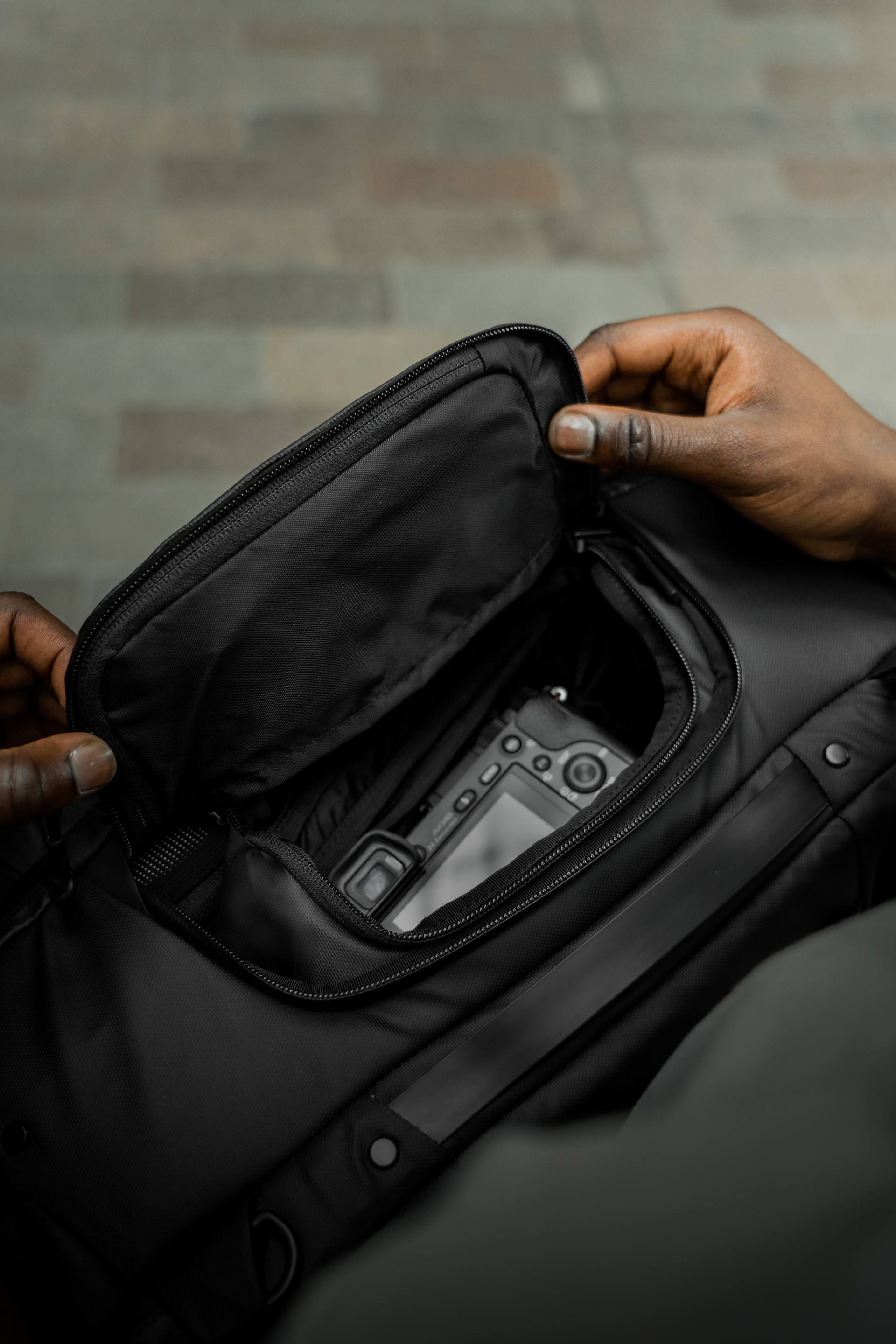
Modular construction is moving from niche technical category to general category. Bags with removable organisers, swappable straps, or configurable internal division. The commercial logic is: one core form factor, multiple use cases. The marketing angle is sustainability and "last longer." But the real reason it's moving is because brands are realizing that a single bag that does one thing well is a harder sell than a system that adapts. This will be a permanent category shift.
Simplified hardware. Fewer logos, fewer branded elements, more functional. This is partly aesthetic (people are tired of logo-heavy bags from 2019-2022) but it's also practical. Simpler hardware is cheaper to source and faster to iterate. Brands that are running quick-cycle inventory appreciate that. It's also an age-old move: expensive-looking products become dated. Simple functional products age better. This will persist.
Real shift: technical fabrics because they solve durability problems that consumers experience. Aesthetic cycle: tonal hardware because it photographs well and Instagram doesn't care that it'll look dated in 2028. Design for the first. Be aware of the second.
Aesthetic cycles: cycling, not staying
Tonal hardware. Everything matching, monochrome zips, metal in the exact shade of the fabric. It photographs beautifully and it's everywhere right now. But it's also solved a problem that didn't exist. Contrast hardware, mixed metals, and visual texture are going to come back. Tonal will become "looking very 2024." Brands that built their aesthetic around this are going to feel dated by 2027.
Minimal branding on exterior surfaces. This is real in the luxury and high-end consumer electronics space. But on mass-market bags it's cycling. Smaller logos and less branding is moving now. But brands need identity and visibility. That will reassert itself. By 2028 we'll see graphic elements and visible branding making a comeback, because brands realize that invisible products don't sell as well as visible ones.
Neutral colorways across the whole collection. This has been moving for three years. It solves a real problem: inventory management and replenishment is easier when you're not carrying 12 SKU variations. But it's also an aesthetic choice, and aesthetics cycle. Colour is coming back into bags. Not maximalism (5-colour patterns aren't coming back), but intentional colour blocking, deliberate hue choices, colour that's about brand identity not about following Instagram trends.
What's genuinely peaking
Ultra-lightweight materials marketed as product benefits. Brands have spent 3 years pushing "it weighs 200 grams" as a value proposition. Consumers stopped caring about that around 2024. They care about whether a bag is functional and durable. The "ultra-light" angle is exhausted. Brands marketing primarily on weight are going to see declining interest.
Visible sustainability credentials without functional difference. Bags made with "recycled materials" where the recycled content is 10% and the bag costs 40% more because of the supply chain overhead. Consumers who actually care about sustainability are getting educated about what that means. Brands making genuine trade-offs in durability or function for sustainability materials are differentiated. Brands making gesture-level changes and marketing them heavily are getting called out for greenwashing.
Venture-backed bag brands launching with heritage narratives. Every new brand has a story about the founder's journey, the inspiration, the reason they exist. Consumers have heard 200 of these in the past 3 years. The ones winning are the ones with functional differentiation or genuine price advantage, not the best story.
What we'd be designing into right now if we were building a general-category bag
Technically appropriate materials for the use case, not materials chosen because they photograph well. Durability enough to last 3-4 years of heavy use without failure. Design that's visually interesting to look at but not dated in 2 years. Modularity or adaptability so a bag can serve 2-3 use cases rather than one. Hardware that's functional and visible but not decorative. Enough colour or visual language to be identifiable, but simple enough that small mistakes don't require a full redesign.
Avoid: designing primarily for Instagram. Assuming minimal branding will stay in favour. Building collections that require 15 SKU variations. Chasing technical material buzzwords without understanding the trade-offs. Assuming luxury pricing is sustainable without luxury distribution or heritage.
- Technical materials and modularity are staying because they solve real problems
- Tonal hardware and invisible branding are aesthetic cycles, not permanent moves
- Sustainability positioning without functional difference is wearing thin
- Design for 3-4 year durability, not for what Instagram looks like in March
The brands winning in 2026 aren't the ones following every trend. They're the ones that designed their core product around real functional shifts and then decided aesthetic language independently. Trends will cycle. Products that solve problems stick around. Design for the second and let the first do what it does naturally.