A backpack is ultimately a device for transferring load from an object to a human body. Everything else is secondary. Yet most brands design the front panel first, sketch the pockets and compartments, and then fit a harness around that volume. The result is a bag that looks good sitting empty but that's uncomfortable or poorly balanced when actually worn. The harness should be the product. Everything else should be fitted around it.
The biomechanics that matter
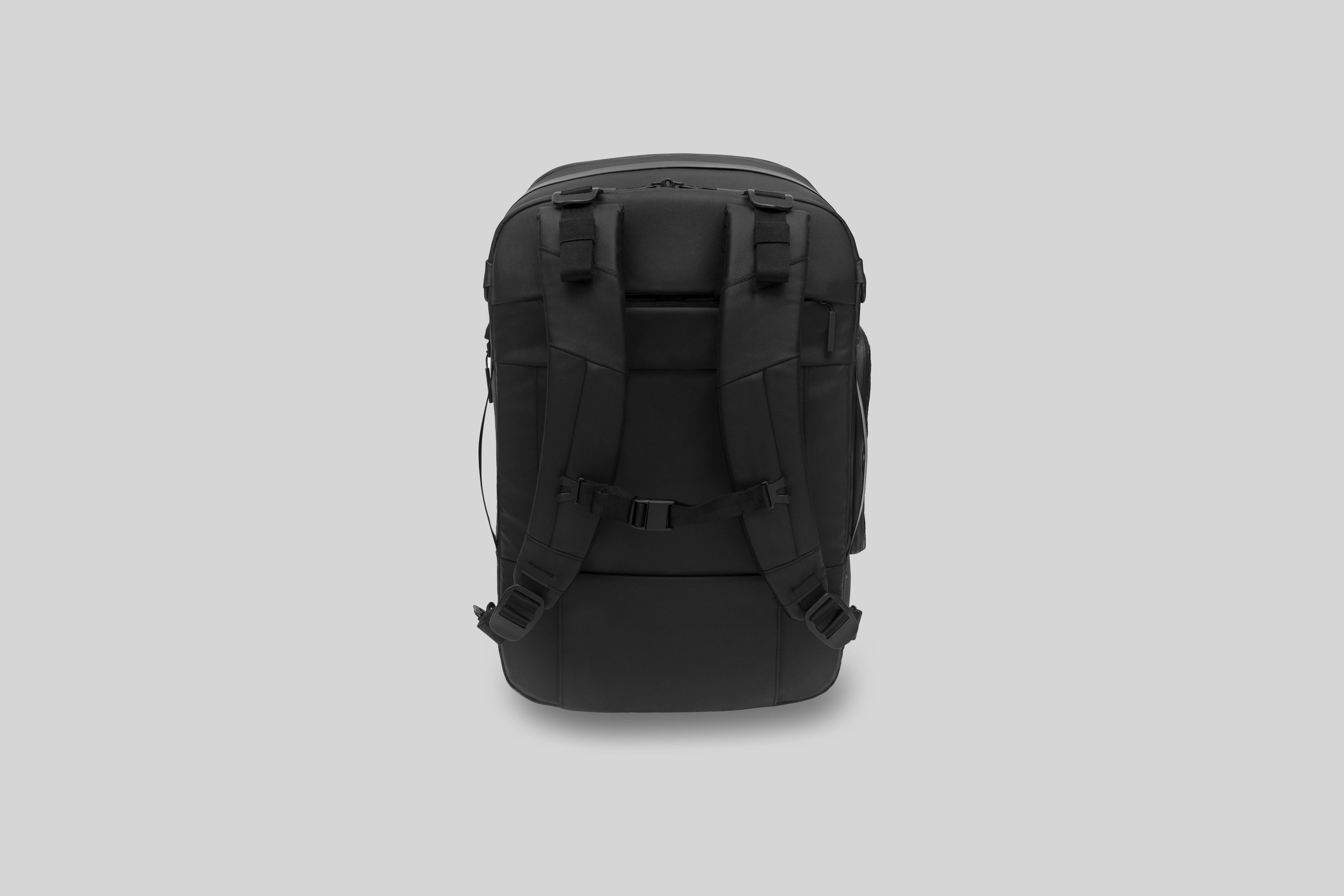
Back panel geometry determines how effectively load transfers to the wearer's torso. The back panel should contact the body across the upper back and extend to approximately the lumbar support point, roughly 10-15cm above the waistband. If the panel is too small, load sits high on the shoulders. If it's too narrow, it doesn't distribute contact area. The actual shape matters. Most back panels are flat. They should be slightly curved to match spinal geometry and increase contact area without additional material.
Shoulder strap width and curvature directly affect load distribution and comfort. A strap narrower than 5cm concentrates pressure on the shoulder point. A strap 6-7cm wide with a gentle curve matches the shoulder anatomy and distributes load across a larger contact area. The curve matters too. A straight strap lies differently than a contoured strap. For any bag carried longer than 30 minutes regularly, the strap geometry is more important to user experience than the exterior aesthetics.
Load transfer point is determined by where the straps attach to the bag. If attachment is too high on the pack, the bag sits away from the body. Load moment increases. The user has to work harder to balance it. Attachment points should be positioned so that when properly fitted, the load sits close to the wearer's spine and the pack's center of gravity aligns with the wearer's balance point. For a 20-litre backpack, that's usually around 12-14cm down from the top edge of the back panel.
The lumbar contact area below the hip position provides stability. A sternum strap across the chest helps transfer load laterally and prevents the pack from rolling off the shoulders under weight. A load lifter strap pulling the pack close to the body at the shoulder blade level changes how load is felt. These components aren't cosmetic. They're structural and they directly impact whether a 15kg load feels like 15kg or feels like 25kg due to poor balance and pressure distribution.
How this shapes the bag around the harness
If the back panel geometry and shoulder strap curve are designed first, the main volume shape is constrained by how it needs to attach. The volume sits in front of the harness. The depth is determined by how the pack can stay close to the body without pressing against the wearer's hips. The width is determined by the shoulder strap span and the back panel width. The compartment layout then fits within that volume.
This is inverted from how most designers approach it. They design 40 litres of volume in an appealing shape and then hang straps on it. Those straps are usually too narrow. The back panel doesn't provide proper contact area. The pack sits away from the body because that's where the geometry led.
Starting with harness engineering forces different questions. What volume actually fits against the body comfortably for the use case? A commute pack doesn't need to be 30 litres. It needs to fit close and carry 15 litres efficiently. A hiking pack needs to carry load at the hips and maintain contact across the back. Different harness designs point toward different volume shapes.
The carry experience is what the body registers
A user picks up a backpack, puts it on, and wears it for an hour. That hour is the product experience. Whether the shoulder straps are comfortable, whether the load balances, whether the back panel contacts their torso properly. These physical sensations are what determines whether they'll use the bag again or sell it on the secondary market.
The number and arrangement of pockets, the external organization, the visual design. These matter for marketing and initial appeal. But they don't determine whether the bag is a success in actual use. Comfort and balance do. A technically flawless harness with mediocre organization is more likely to be a keeper than impressive organization with an uncomfortable carry.
Most brands spend design energy on the visible features and treat the harness as the execution challenge to solve later. That's resource allocation backwards. The harness is the product. Treat it like the primary design element. Get the biomechanics right, the load transfer right, the contact area and geometry right. Everything else follows. When the harness is engineered well, the rest of the bag is just organization and storage. When the harness is an afterthought, even a well-organized bag is uncomfortable to use.
The user doesn't feel the pocket layout on a two-hour carry. They feel whether the load is balanced, whether straps cut into shoulders, whether the pack stays close to their body. Design the harness first. Fit the bag around it.
We've prototyped bags where we fixed only the harness engineering and kept everything else the same. The user feedback changed dramatically. Users who rejected the original version due to discomfort suddenly kept the revised version. Nothing about pockets, layout, or materials changed. Only the back panel curve, strap width, and attachment geometry. That's how much the harness determines the product experience.
For any bag intended for regular extended carrying, the harness system is the product. Everything visible is secondary. Design accordingly.