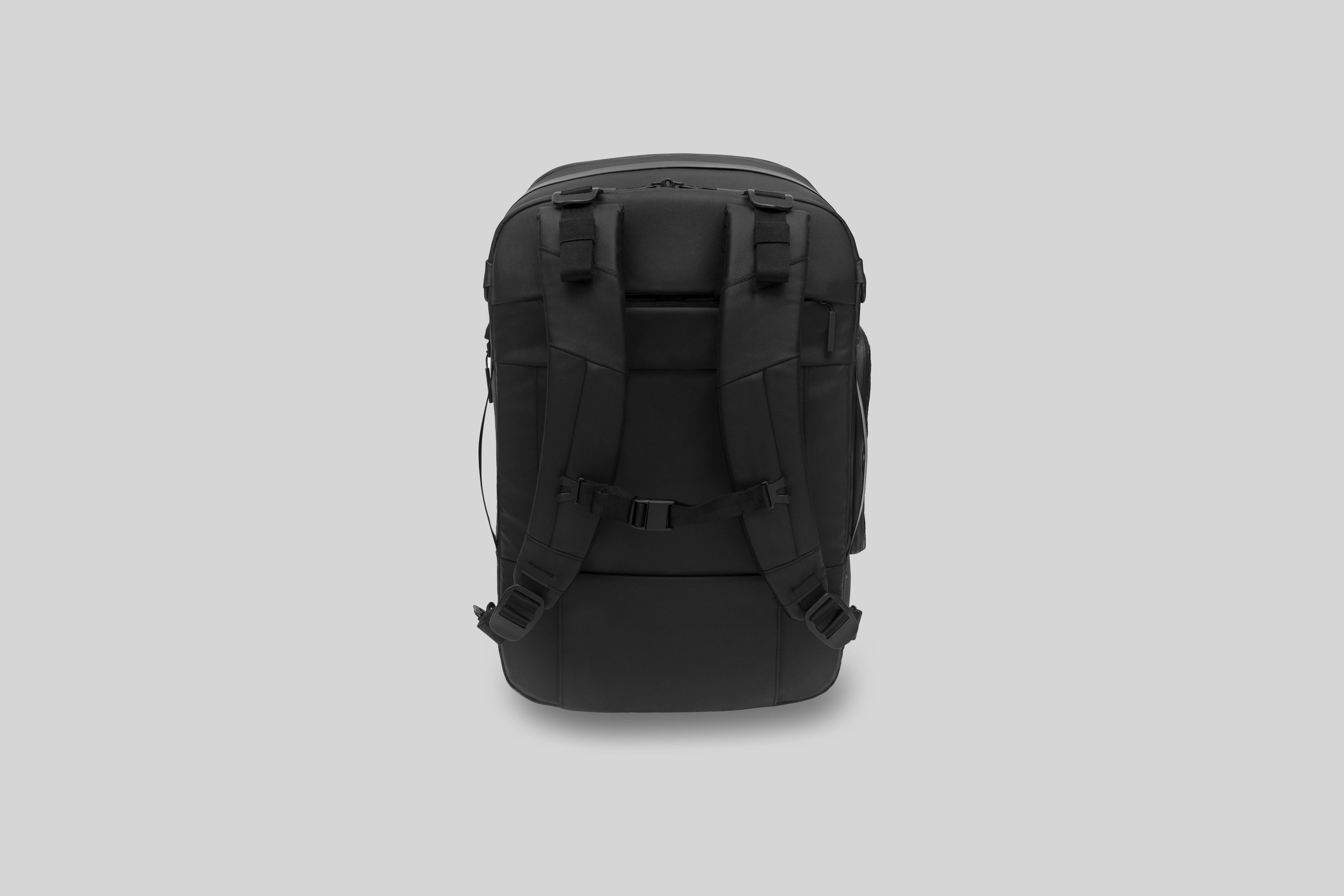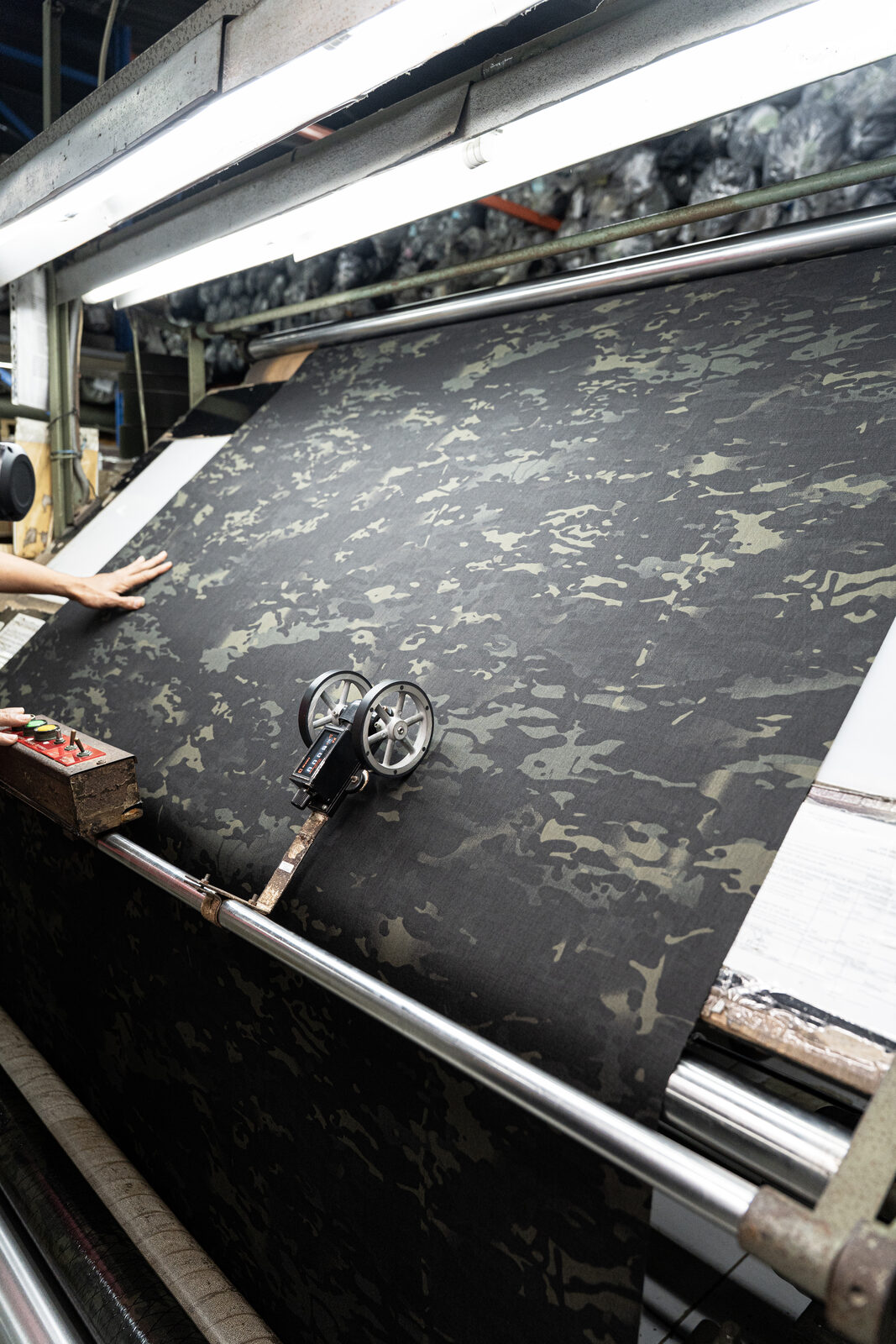
XPAC is a composite fabric with a reputation that precedes it: lighter, stronger, more expensive than conventional options. Designers see it as the technical fabric shorthand for quality. What XPAC actually is and when it justifies the cost requires looking past the brand story.
The construction and what it does
XPAC comes from Dimension-Polyant, a German-Japanese manufacturer. The construction is three layers: woven nylon face (usually 70D or 100D denier) glued to a polyester film core, backed with ripstop nylon. The polyester core runs crosswise in threads, creating the ripstop structure. The whole thing stays fused together.
This construction provides load stability without stretch. Standard ballistic nylon elongates under tension. XPAC's film core resists elongation, so a strap or load-bearing panel won't stretch and deform under weight. The fabric stays dimensionally stable. It's light for its strength. A 200gsm XPAC performs like heavier conventional nylon. The ripstop pattern is distinctive. Consumers recognise it instantly as "technical."
The sound is different too. XPAC makes a crisp rustling noise as the polyester film crinkling. Some users love this. Some find it irritating on longer carries. Both are valid responses to the material.
The cost premium is real
XPAC costs 4 to 6 times the price of standard ballistic nylon. A 200gsm ballistic nylon runs roughly 2-3 euros per metre at volume. XPAC runs 10-15 euros per metre. For a medium-sized backpack using 1.2 metres of primary face fabric, the difference is immediate. Before labour, dyes, trims, or factory markup, you're paying an extra 10-12 euros in material per unit.
For a consumer-facing brand, that cost translates to retail price. A £90 backpack built in conventional nylon might be £140-160 in XPAC. The material cost alone doesn't explain that gap. Brand positioning and market positioning account for the rest. But material cost is the foundation.
When XPAC earns its cost
Sail bags and load-bearing technical packs are where XPAC's dimensional stability matters. A sail bag takes constant compression and load cycling. XPAC's resistance to elongation prevents the bag from stretching out over hundreds of uses. A technical pack with a load-bearing panel where body weight transfers through straps benefits from a fabric that won't creep. The engineering case is defensible.
Dry bags and weatherproof compartments also benefit. The polyester film core resists water absorption at the molecular level. Standard nylon requires coating for water resistance. XPAC is inherently resistant. For bags used in wet environments repeatedly, the durability advantage compounds.
When you're paying for aesthetics
A lifestyle commuter bag, a small EDC (everyday carry) pack, a camera insert pad. These see light-to-moderate use, stable carrying conditions, no extreme loading. XPAC's stretch resistance provides no functional benefit. Dimensional stability doesn't matter when the bag isn't under load. Water resistance is redundant if the bag is used in normal weather and dried promptly.
In these applications, using XPAC is about brand messaging and visual identity. The ripstop pattern signals technical credibility. The premium pricing supports a quality narrative. For many users, that signal is worth the cost. That's a legitimate positioning choice. It's a different choice than "XPAC is the right material for this application."
XPAC solves specific engineering problems exceptionally well. For applications where those problems don't exist, you're paying for reputation and visual language, not function.
The decision to specify XPAC should start with application requirements, not the desire to use a premium material. What forces act on this fabric? How much load will it carry? What environment will it see? If the answers call for dimensional stability and water resistance, XPAC earns its premium. If they don't, a well-chosen conventional nylon costs less and performs identically.